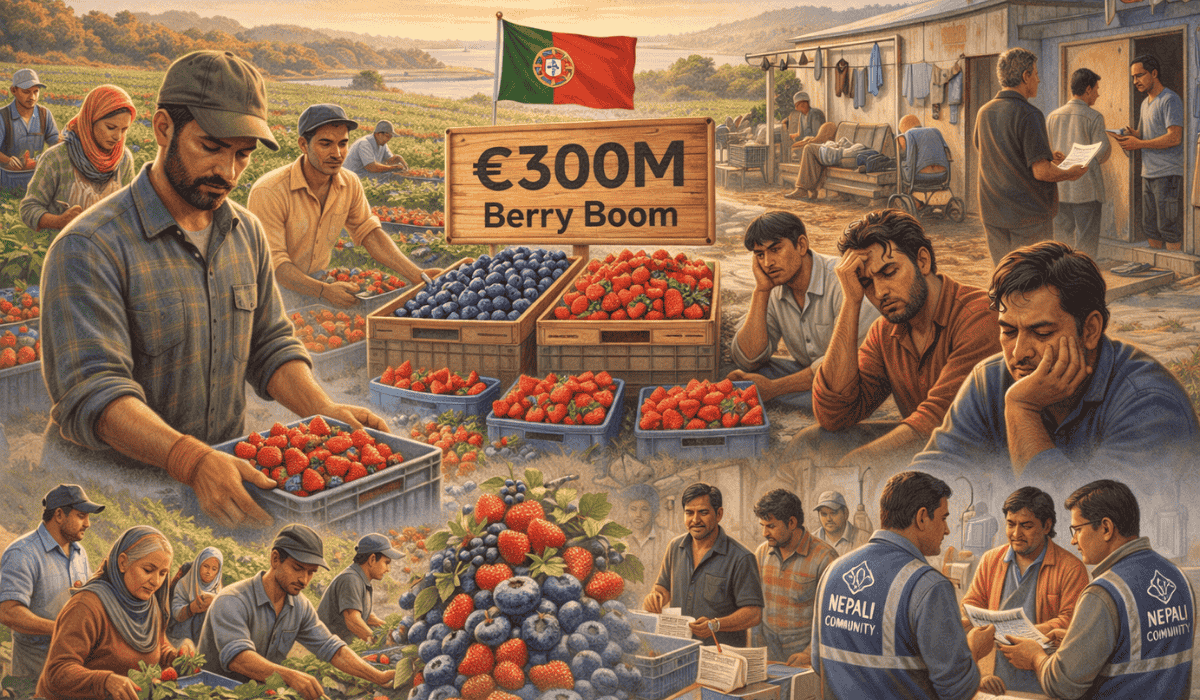
Portugal’s booming berry industry, which generates nearly €300 million in exports annually, relies heavily on South Asian migrant labor. Thousands of workers, many from Nepal, India, and Bangladesh, power farms in regions like Alentejo and the Algarve, harvesting strawberries, blueberries, and raspberries that supply European markets. Yet behind this agricultural success story lies a pattern of exploitation and hardship.
Many South Asian workers arrive through informal recruitment networks, only to face scams, fake job contracts, and misleading promises of legal residency. Once in Portugal, some discover their contracts are invalid or never registered, leaving them undocumented and vulnerable. Long working hours, below-minimum wages, overcrowded housing, and dependence on labor intermediaries are common complaints. Environmental stress adds another layer of difficulty, as water shortages and extreme heat increasingly affect working conditions and crop stability.
Amid these challenges, Nepali community associations have emerged as vital support systems. These groups assist workers with translation, legal guidance, access to healthcare, and basic integration into Portuguese society. They also act as bridges between migrants, employers, and local authorities, advocating for fair treatment and regularization.
While South Asian workers are central to Portugal’s agricultural growth, their struggles highlight the urgent need for stronger labor protections and ethical recruitment, so the berry boom does not continue at the expense of human dignity.
Agri Worker Struggles: South Asians Behind Portugal’s €300M Berry Boom